
I don't know how you all are, but when I see a new technology or something sophisticated in the transmission system or more intricate levers in the suspension, I am amazed, pleasantly surprised, and I wonder how it works, what it adds, how it rides, what the maintenance of this thing is like? Another chain? Oh dear, it's also exposed, another plate to remove and clean...
RMU launches the Nighttrain model, a bike clearly aimed at the aggressive gravity/enduro segment, built around the new generation of Orion suspension. The platform promises high sensitivity on small bumps, but also consistent support when the pace increases.
“The system has been completely reconfigured to provide support and suspension control similar to what I would design for a World Cup DH race bike… It’s supple on the small bumps… when you get into berms… there’s support… and on bigger hits, that support gives way to big bump compliance. The harder you push it, the more it rewards you.”
— Dave Weagle
Suspensions designed by Dave Weagle, briefly you can find only the initials DW in descriptions, we also find them implemented at Esker: https://eskercycles.com/pages/orionsuspensiondynamics


But also at Pivot: https://www.pivotcycles.com/en-us/bikes/phoenix
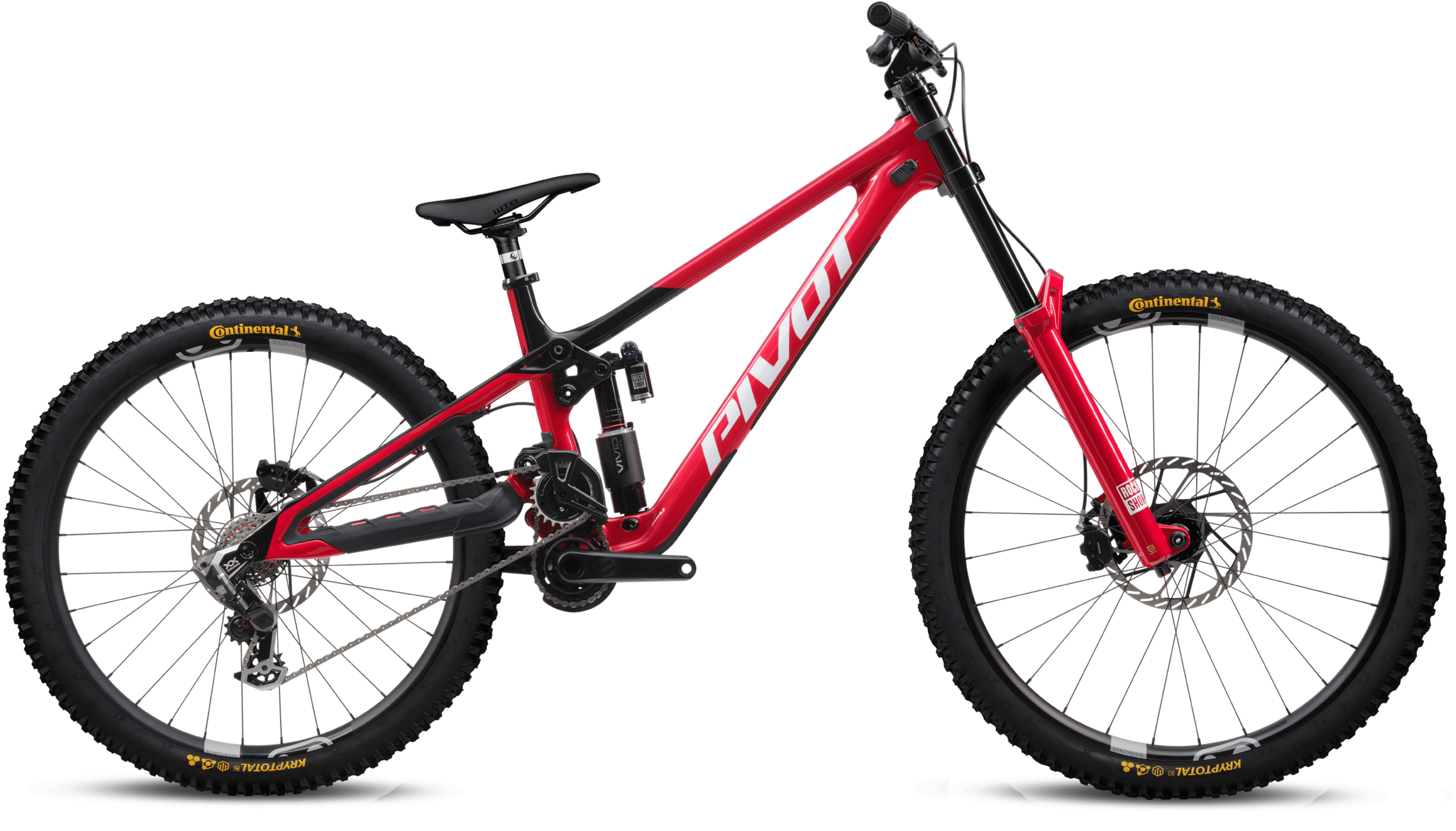


Atherton also has the DW6 system: https://www.athertonbikes.com/bike/a150-enduro.html

For enthusiasts: http://www.dw-link.com/home.html, http://www.dw-link.com/physics.html
Frame, kinematics, and technologies
Nighttrain is not just a frame with a premium shock, but a fairly complex technological package, centered around a few key ideas:
https://rmumtnculture.com/products/nighttrain

Orion Dynamics – 6-bar flexstay
The platform is developed by Dave Weagle and implemented here as:
6-bar flexstay design
two short links that control lateral stiffness and braking forces
kinematics optimized for 1x transmissions with a wide range
The declared result:
pedaling efficiency without pedal feedback
consistent traction on varied terrain
stable behavior both uphill and on technical descents
RMU mentions that this generation of Orion is completely reconfigured compared to previous versions.
Mid-pivot + dual idler
Nighttrain uses a mid-pivot architecture, but without the typical compromises thanks to the dual idler system:
chain positioning similar to a high-pivot
but without the efficiency losses of a single idler

Advantages:
significant reduction in pedal feedback
minimal influence of the derailleur clutch on the suspension
efficient power transfer through a dual chain system
Interesting implementation details:
large primary chainring, with an odd number of teeth
chain with an even number of links → reduced wear
large secondary chainring → increased efficiency
Axle path and dynamic behavior
The mid-pivot configuration directly influences the bike's behavior:
shorter chainstays statically
but which lengthen at sag for stability
without becoming excessively long at the end of the stroke
The goal:
stability on rough terrain
maintained maneuverability in turns and technical sections
Size-specific geometry & kinematics
One of the rarer elements on the market:
geometry and kinematics adapted by size (S1–S4)
the dual idler layout changes depending on size
chain length remains constant across all sizes

Consequences:
different leverage ratio for each size
suspension “tuned” for the rider's weight and style
consistent behavior regardless of size
Frame and suspension
Nighttrain is also offered as a frameset, equipped with:
shock: Fox Factory Float X2, 230×65 mm
Frameset w/ Shock
Price: 2,499 USD
Weight: 4.63 kg (S2, with shock)
Complete Configurations
(All include: tubeless valves, sealant)
Shimano Deore — 4,999 USD
Marzocchi Super Z, 170 mm
Fox Float X2 Performance
Shimano Deore 4-piston
Shimano Deore M6100 SGS + M6100 cassette
Weight: 16.78 kg
Shimano XT Di2 — 6,999 USD
Fox 38 Factory Grip X2, 170 mm
Fox Float X2 Factory
Shimano XT Di2
Weight: 16.32 kg
Shimano Saint 190/170 DH — 6,499 USD
Fox 40 Factory, 190 mm
Shimano Saint
Weight: 18.14 kg
What else is on the market with similar concepts?
Nighttrain fits into a relatively narrow niche of bikes that combine:
mid/high pivot
idler pulley
gravity-oriented complex kinematics
Relevant examples:
Forbidden (Druid / Supernought platform) – high pivot with idler
Commencal Supreme DH – high pivot DH race
Norco Range C2 HP – high pivot enduro
Cannondale Jekyll (recent versions) – high pivot + idler
Deviate Highlander – high pivot with a focus on efficiency
What differentiates Nighttrain:
dual idler system (rare in the industry)
integration into a 6-bar Orion
size-specific kinematics approach, nearly non-existent at this level of complexity
Conclusion
RMU Nighttrain is not just another aggressive enduro, but an ambitious technical project that combines multiple advanced concepts into a single frame: Orion 6-bar, dual idler, and mid-pivot. The result is a platform clearly aimed at riders who ride hard and seek maximum control in challenging terrain.
